
July 2026
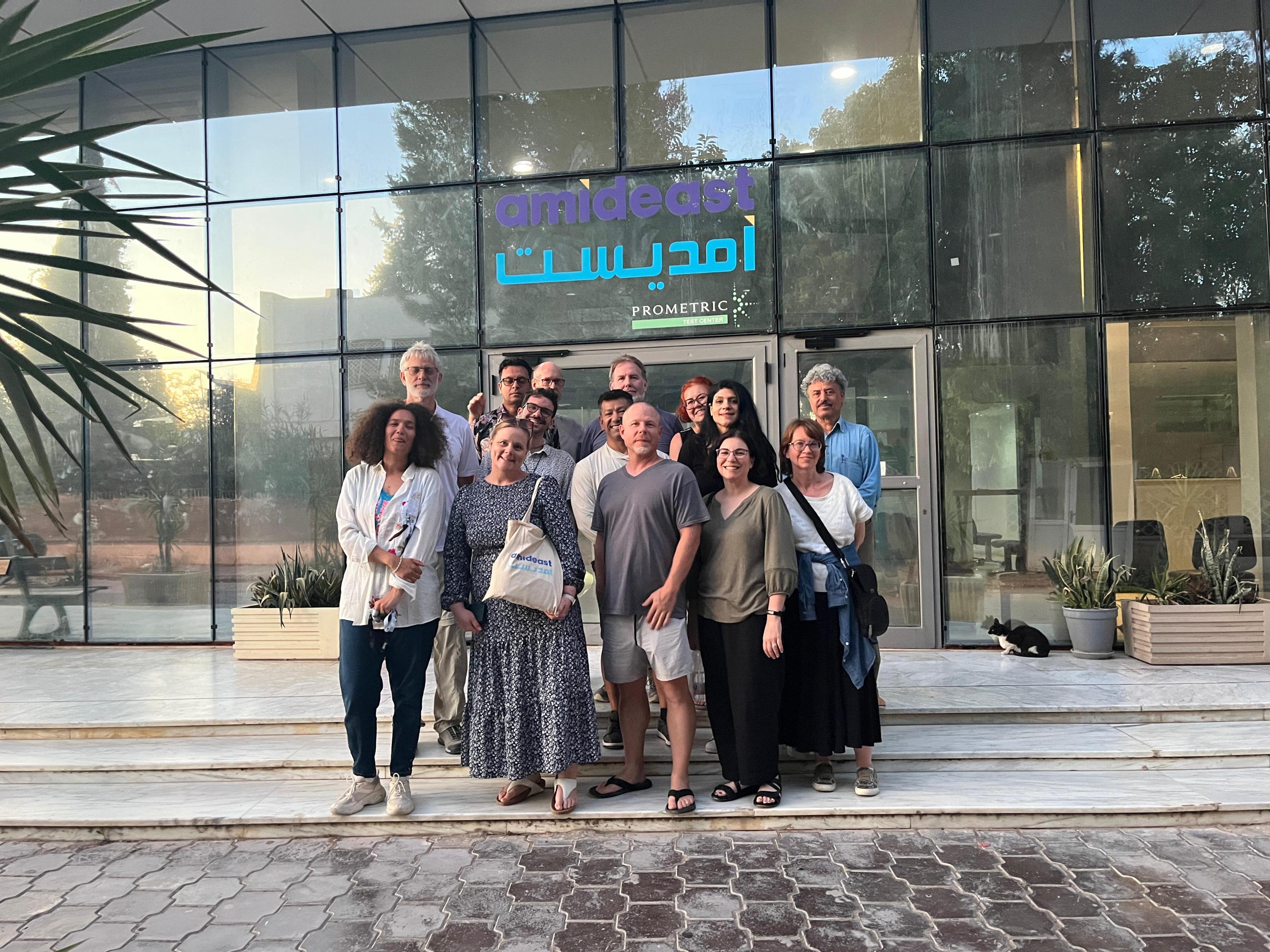
Faculty members often look for ways to bring the world into their classrooms. For 14 faculty members and staff at Harper College, a community college in the northwest suburbs of Chicago, that meant spending a year learning about the Middle East and North Africa region before traveling to Morocco and Tunisia for a two-week international learning seminar. The program, created in partnership with Amideast, allowed participants to learn directly from educators, scholars, community educators, scholars, community leaders and institutions across the region. The experience is already influencing how faculty teach their courses.
“The result has been transformative,” says Richard Johnson, Ph.D., Director of the Center for Global Education and Engagement at Harper College. “These encounters provided authentic perspectives, challenged assumptions, deepened understanding, and inspired our faculty and staff to think differently about teaching, learning, and global engagement.”
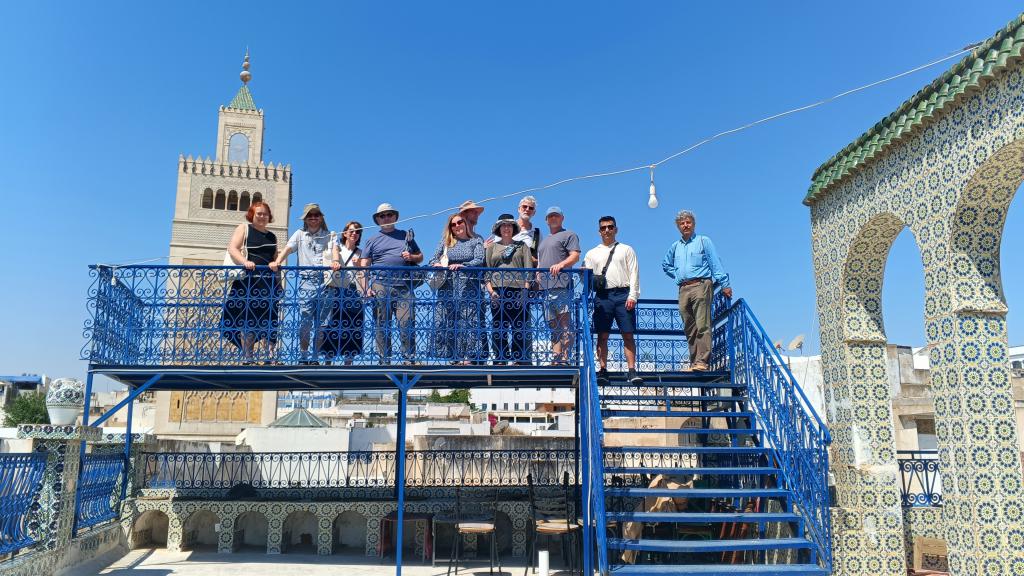
Johnson has spent the past several weeks collecting and reviewing reflections from faculty and staff who participated in the seminar. One participant reflected that “few experiences matched the depth of learning that came from simply being present in Fes,” describing how the sights, sounds and daily life of the ancient medina created an immersive encounter with Moroccan history and culture. Experiencing Fes as a historic center of Islamic learning gave educators reference points they plan to bring into their teaching with greater cultural respect.
Throughout the seminar, conversations with Moroccan and Tunisian educators, students, scholars and community members gave faculty firsthand perspectives on the region’s educational systems and daily realities. As one participant observed, the hosts and guides “provided us with the lived experience of the region,” highlighting the value of learning through direct relationships.
Experiencing the city of Tangier firsthand deepened participants' understanding of centuries of interaction between Africa and Europe and helped them see the Mediterranean as a connected space shaped by movement and exchange. Meetings with local scholars, educators and community leaders also helped participants better understand the opportunities and challenges facing institutions across the region while reinforcing the importance of international collaboration in higher education.
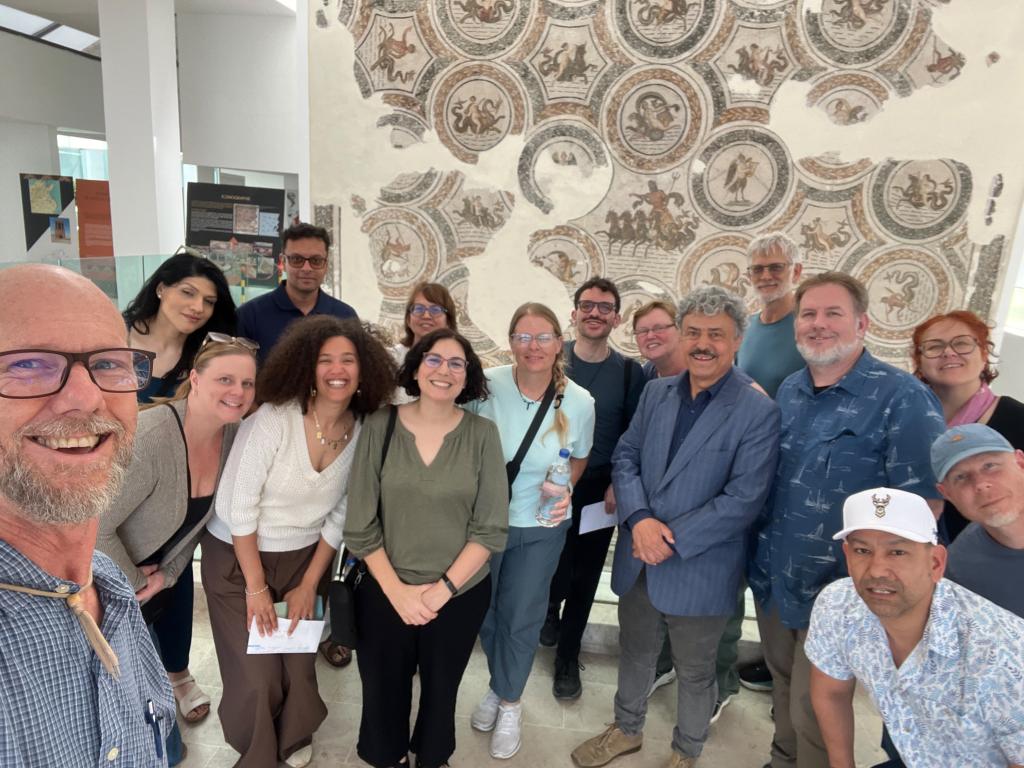
Participants noted how visiting historical sites revealed the lasting influence of cultural exchange and adaptation on North African societies. One participant shared that these experiences strengthened their commitment to bringing historical and cultural context into science education while deepening their understanding of environmental issues.
For many participants, some of the most memorable moments came through conversations with migrants and refugees supported by the Foundation Orient-Occident. Hearing personal stories of resilience and perseverance brought a human dimension to discussions of migration, access to education and social inclusion. The experience reinforced the importance of listening to lived experiences and creating educational environments where those perspectives are valued.
The seminar’s impact is already extending back to Harper College. Johnson noted that faculty members are translating the experience into projects that will benefit students and the campus community. One faculty member is developing an interactive ArcGIS StoryMap that incorporates geographic data, images and narratives from the seminar to explore environmental sustainability, water management, agriculture and cultural heritage across Morocco and Tunisia. Another plans to redesign course content to include more authentic comparisons between Spanish-speaking societies and North African cultures, helping students better understand the Mediterranean as a connected region.
In Johnson’s words, “This is how internationalization becomes meaningful and lasting, not as a one-time experience, but as a catalyst for institutional transformation. I’m grateful to Amideast for helping design an experience that bridges preparation, immersion, and impact.”
About the Program:
This field seminar was developed as a customized program by Amideast Education Abroad and Harper College. Amideast faculty and staff delivered eight synchronous virtual modules over the course of the academic year as part of Harper College’s Teaching Without Borders course, and this class time culminated in a 15-day field seminar exploring Morocco and Tunisia. Harper faculty and staff participants met with local scholars, experts, and peers, toured sites of cultural and historical significance, and discussed their work in local communities with civil society organizations.
Are you a community college faculty or staff member interested in a customized field learning seminar? Please contact us at EdAbroad@amideast.org.
Are you a community college student interested in studying abroad? Click here to learn more about the Amideast Community College Scholars Fund and programs for you.