
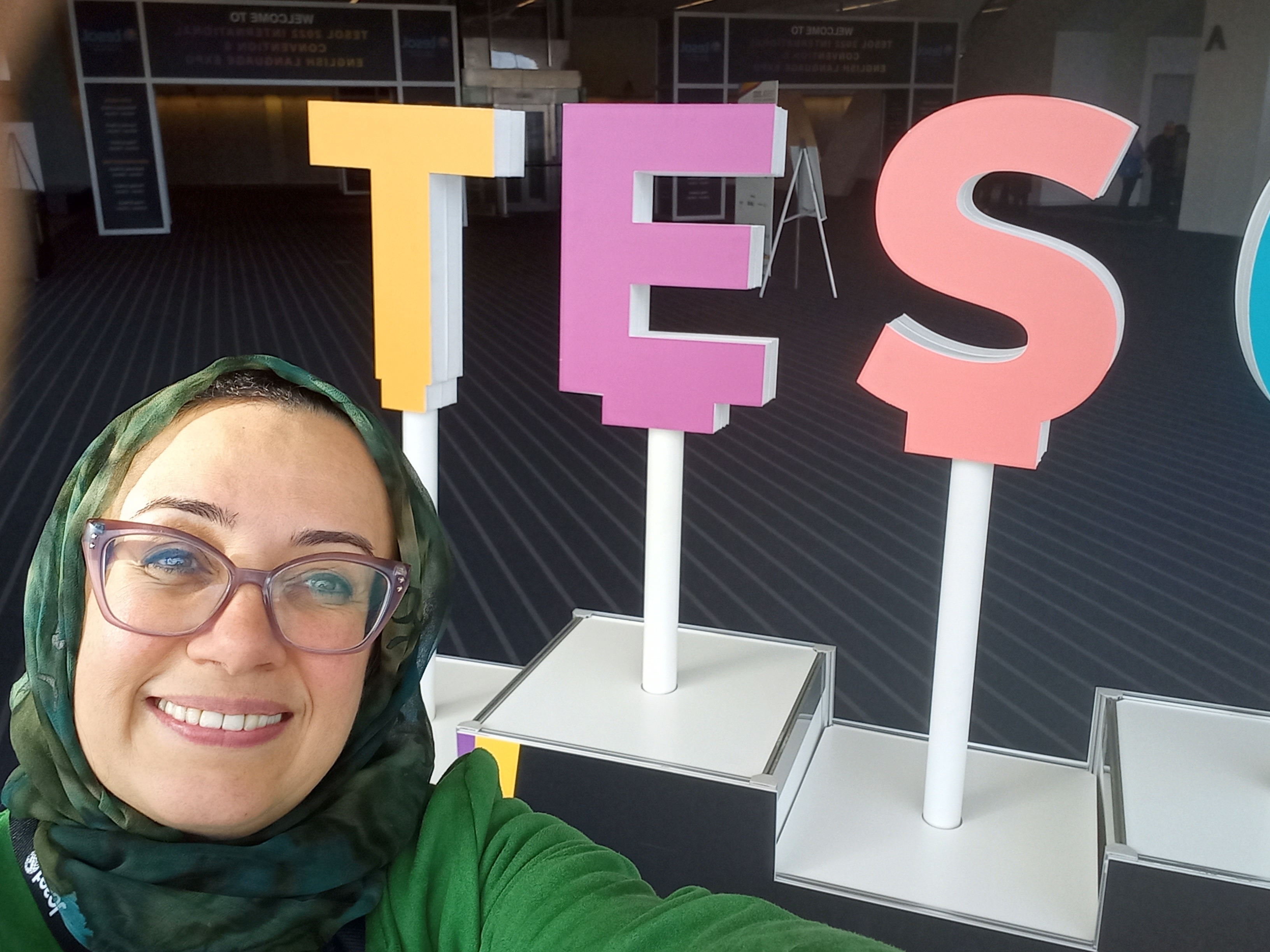
Mariam Bedraoui's path to becoming an English education leader began with a spark in tenth grade, when a dynamic teacher insisted every student speak up in class. Like many students, foreign languages hadn't always come easily to her. But in that classroom, something shifted. “I was excited to hear myself saying English words and phrases,” she recalls.
That early thrill sent her to secondhand bookshops in search of reading comprehension texts, an English-Arabic dictionary in hand. “Learning English was for me an empowering process... It made feel I had the same potential as others.”
Today, Mariam is an English Language Teacher (ELT) inspector and supervisor in Morocco and one of the educators helping shape the country's national middle school English curriculum. Her path from high school teacher to curriculum leader included 12 years in classrooms across Al Hoceima and Casablanca, a semester-long professional development program in the United States through ILEP (the International Leaders in Education Program, a State Department initiative), and a master's degree, all before sitting for the national inspector's examination.
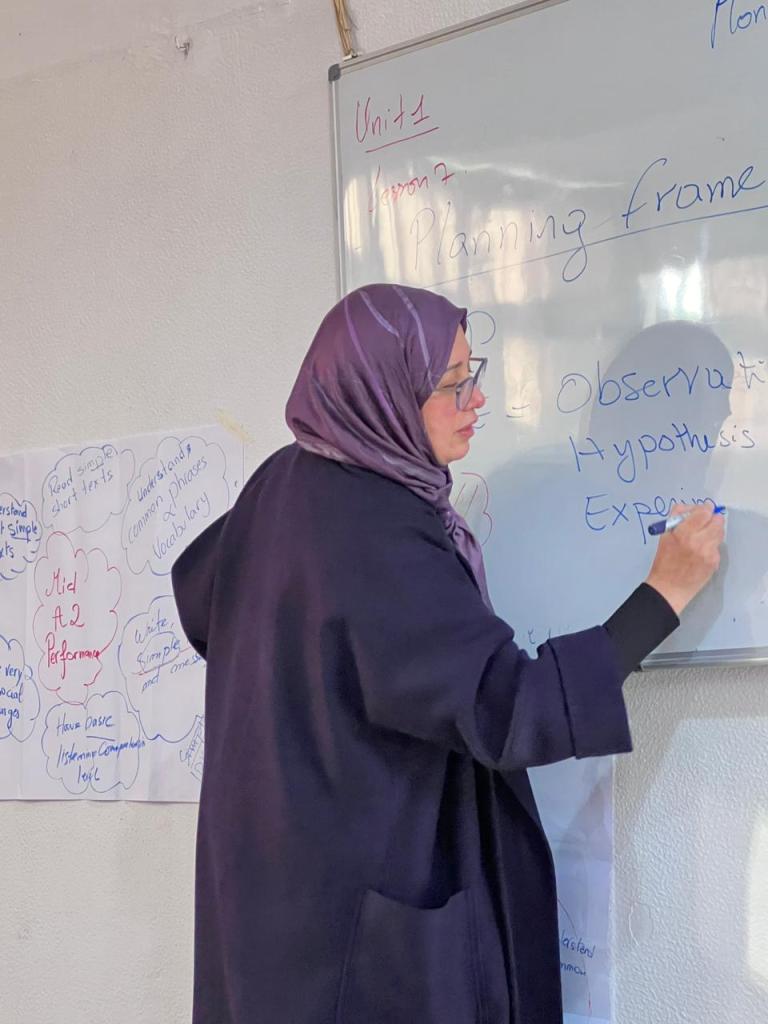
In 2018, Amideast invited Mariam to enroll in the Professional Certificate in English Language Teaching (PCELT) program. She accepted immediately. “I read about the mix of experiential learning, hands-on training and the practice of reflection it offered,” she says. At that point, already four years into her role as a supervisor, she was eager for tools to better support the teachers in her care.
Two experiences in particular showed her the program's impact firsthand. The first was a structured reflection cycle (moving from releasing initial feelings to analyzing key teaching moments to planning future steps) which sharpened her confidence and efficiency as a supervisor. The second was a roleplay exercise in which participants became learners of Ukrainian, experiencing firsthand the disorientation of being an absolute beginner. The exercise permanently changed how she reads a classroom, giving her a keener eye for where learners might struggle at each stage of planning and delivery.
“I am so proud to be a PCELTer,” she says. “Before the program, I had inner, unarticulated thoughts about teaching, learning, the role of teachers, the role of materials. The PCELT program equipped me with the skills to verbalize these thoughts, acknowledge them and subject them to experimentation. It helped me bridge the gaps between my beliefs and practices and develop confidence to speak about my theories of what teaching and learning processes involve.”
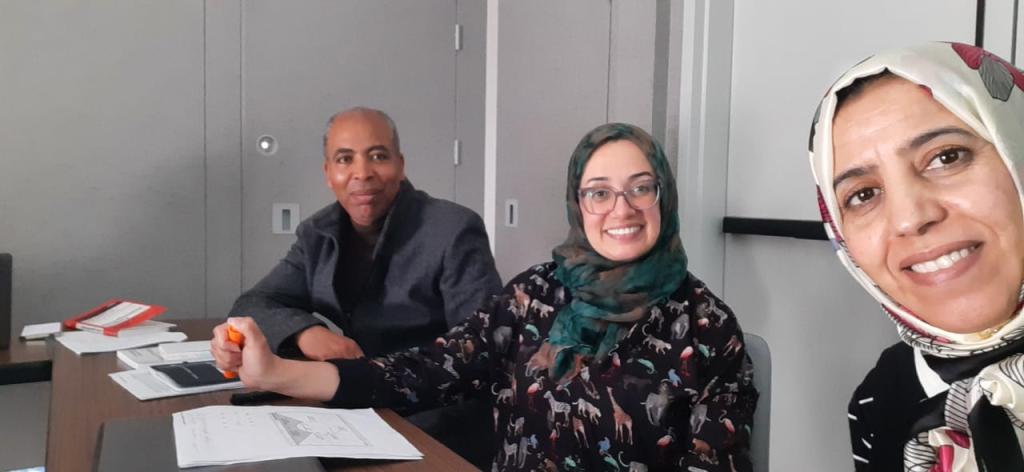
PCELT also challenged some of her deepest assumptions. Observing a student who learned English through songs, podcasts and online chats forced her to rethink what language acquisition actually looks like. “My conclusion was that people found their own ways to practice a language, what improves language proficiency is the amount of exposure and interest and not the methods themselves,” she said.
After the program, Mariam channeled what she had learned directly into her supervisory practice, redesigning training sessions around hands-on tasks, softening the language of her observation reports, and grounding her feedback in evidence gathered by observing students rather than teachers. She also launched a personal teaching initiative, working with young orphans who were absolute beginners in English, a chance to test new strategies herself before asking teachers to adopt them. The experience reinforced what had become her core belief as an educator: “Focus on learning and make your teaching serve learning. Your sense of achievement should stem from the amount of learning and progress taking place among your students, and not from how much planning you do or lessons you complete. Don't be obsessed with finding faults and correcting mistakes. Catch small achievements and praise them openly.”
Your sense of achievement should stem from the amount of learning and progress taking place among your students, and not from how much planning you do or lessons you complete.
Her vision for English education in Morocco is enterprising. She wants the curriculum to honestly assess where students are when they arrive, slow down in the early stages to allow for remedial work, and above all, move away from the obsession with lesson completion.
“Teaching plants learning seeds in the classroom soil," she says, "but the seeds need to grow in the light and air of the real world.”
Are you an education leader interested in providing training for teachers? Contact jkennedy@amideast.org for information on our custom programs.