July 2026
Amideast Egypt celebrated a milestone achievement this week as 240 university students and professionals across Cairo, Alexandria and Aswan completed the English for Career Readiness and AI Literacy (ECRAiL) program, implemented in partnership with the U.S. Embassy in Cairo to prepare young Egyptians for an increasingly AI-driven labor market.
The program delivered 180 hours of training combining professional English instruction, AI literacy and digital competencies, while also connecting participants directly with employers through site visits and networking events. The partnership reflects a broader pattern of U.S.-Egypt cooperation in education, technology and workforce development.
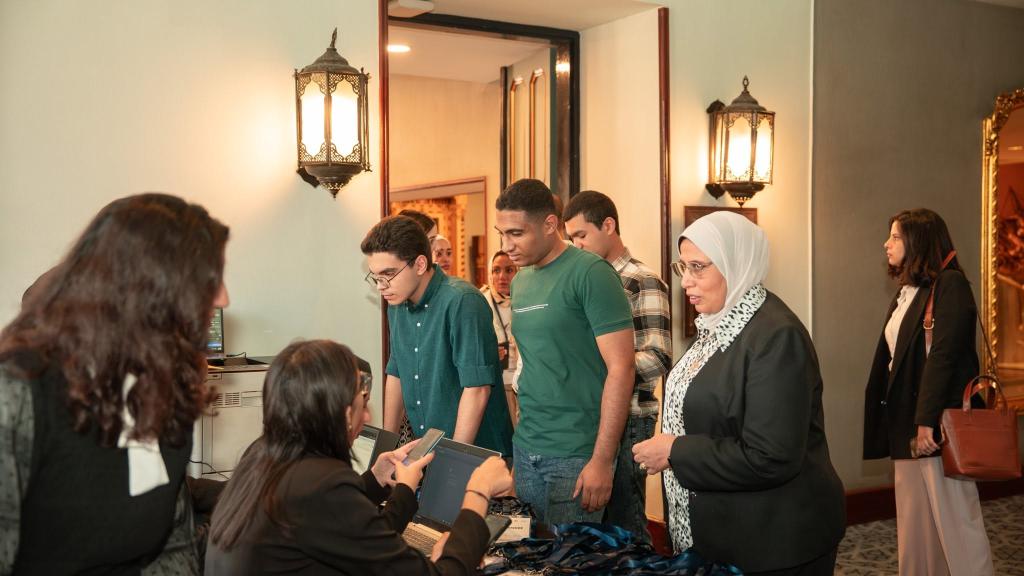
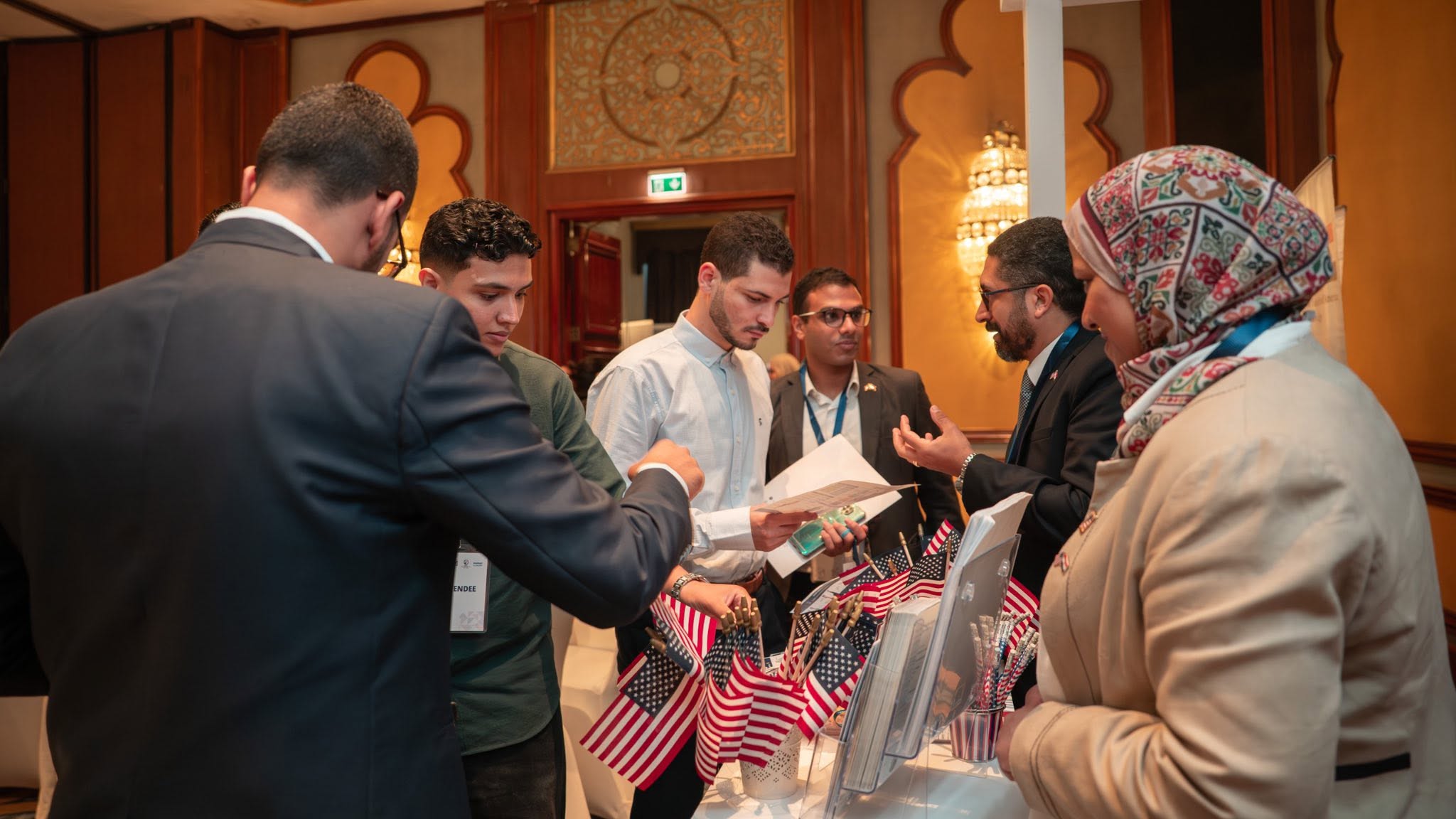
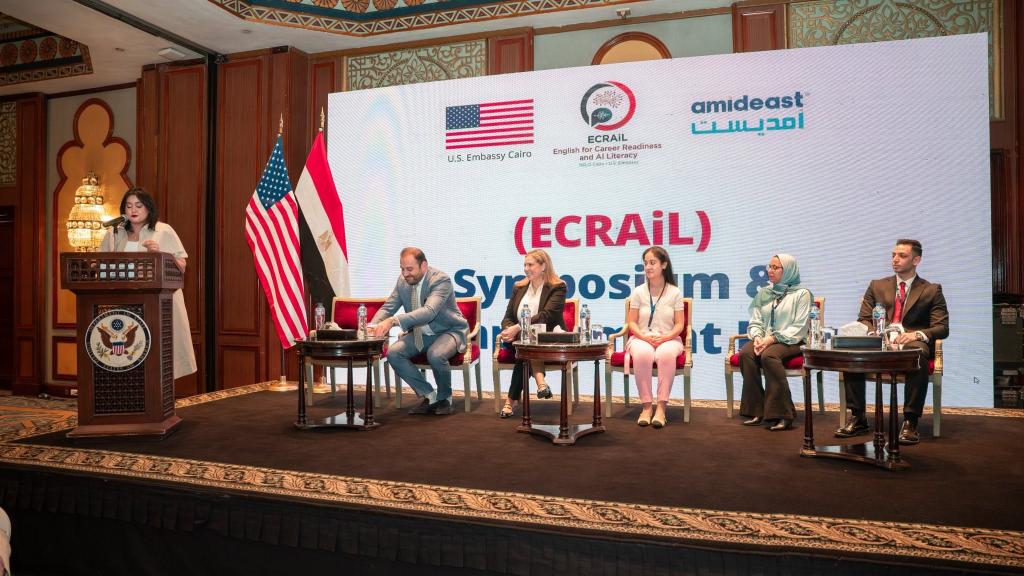
Amideast Egypt Country Director Shahinaz Ahmed joined embassy officials at the graduation, which also featured a job fair drawing more than 20 companies, including IBM and General Motors alongside major Egyptian employers, giving graduates a direct pipeline into the job market.
Central to the program's success was Amideast's on-the-ground coordination across three cities. U.S. Embassy officials singled out Amideast staff member Reem Dawod, with Ruben Harutunian, Minister Counselor for Public Diplomacy, extending "special thanks to Reem Dawod for her dedication and pivotal role" in implementing the initiative across Cairo, Alexandria and Aswan, according to Ahram Online's coverage of the graduation ceremony.
The graduates themselves reflect Amideast's reach across disciplines and career stages. Among them were a Cairo social work graduate who built an automated attendance and messaging system for her students, an Alexandria computer science student who broadened his skills into UI design and digital marketing, and an Aswan anesthesiologist who used the program to sharpen her leadership and communication abilities. Harutunian framed the milestone as forward-looking, telling graduates, "Today is not the end of your journey; it is the beginning."
Jerrold Frank, the embassy's Regional English Language Officer who worked alongside Amideast on the curriculum, noted that the Egypt program represents the most advanced iteration of a model he first launched 12 years ago, telling Ahram Online it later expanded to Vietnam, Laos, and Cambodia, achieved remarkable success in Pakistan, and is now being implemented in Egypt in its most advanced and updated form. He described the curriculum's distinct approach toward AI, explaining that participants are taught to view artificial intelligence as a partner that enhances productivity rather than as a substitute for human talent.
Beyond technical instruction, Amideast's training emphasized interview skills, teamwork and entrepreneurship, equipping graduates not just to use AI tools but to launch their own ventures through the program's entrepreneurship track. Frank credited the human-centered approach as essential, saying he always tells participants "that they should walk into a job interview with enthusiasm in their eyes. That is something artificial intelligence cannot replace." He also pointed to the program's adaptability, noting "artificial intelligence is constantly evolving, and we must evolve with it."
Paul Oliva, Counselor for Commercial Affairs at the U.S. Embassy, framed the graduation within a larger regional vision, saying, "We see promising opportunities for Egypt to become a regional AI hub serving the African continent and the region."
With three cohorts now graduated, Amideast and the U.S. Embassy say the partnership will continue expanding, reinforcing Amideast's role as a key implementer of U.S.-Egypt workforce development cooperation heading into future program cycles.
Reporting based in part on coverage by Doaa Mohamed Youssef for Ahram Online.