
By: Quincy Dermody, Amideast
The International Day of Persons with Disabilities is a time to reflect on how inclusion transforms lives. At Amideast, we’ve seen firsthand that access to higher education can empower students with disabilities to thrive. Since 2018, we partnered with Egyptian universities and government to make campuses more inclusive and along the way, we’ve learned valuable lessons that continue to guide our work.
The Challenge
Managing scholarships that included students with disabilities revealed the barriers they faced. Outdated bylaws restricted students with disabilities to “theoretical” faculties, excluding them from practical fields like engineering or science. Many professors were unaware that these rules had changed, and faculty handbooks still carried old restrictions. Physical barriers were common too — older campuses lacked ramps, elevators, or accessible classrooms. Even when staff wanted to help, they often felt uncertain about what was required or feared doing the wrong thing. As a result, students were left without advocates, and professors without guidance.
Our Response
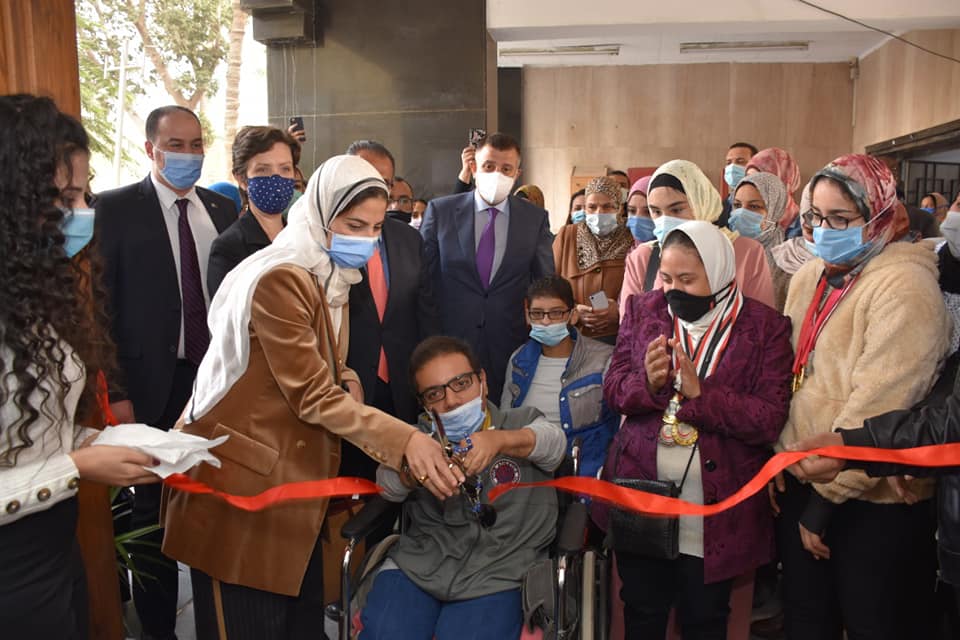
To address these challenges, Amideast worked with five universities to establish pilot disability service centers. We collaborated with leadership on staffing and policies, conducted accessibility assessments, and trained faculty and administrators on disability law, awareness, and assistive technology. With these centers operating sustainably, in cooperation with the Ministry of Higher Education, the model expanded to 27 public universities across Egypt.
The Impact
The results have been tangible.
- Enrollment of students with disabilities increased by 14% at the pilot universities.
- Faculty bylaws were updated, opening new fields of study, including engineering for blind students.
- Disability centers became hubs of advocacy, advising students and families on their rights and expectations.
As one of the first center managers, Menna Mamoun, explains: “Disability Centers in Egyptian universities have been pioneering models for implementing educational and social inclusion. They have empowered students with disabilities to access higher education and fully participate in university life, while raising awareness among the university community and eliminating both positive and negative discrimination.”
Looking Ahead
The disability centers did not remove every barrier, but they ensured students and professors are no longer facing them alone. With dedicated teams in place, universities now have the structure and expertise to keep advancing inclusion. Amideast remains committed to expanding this model and continuing to learn from our work with people with disabilities, in Egypt and beyond.