
An inspiring platform where young minds showcase their creativity, critical thinking, and tech skills.
Description & Details
Amideast is proud to launch its first STEM Hackathon for students aged 11–15. This exciting competition invites young innovators to design creative solutions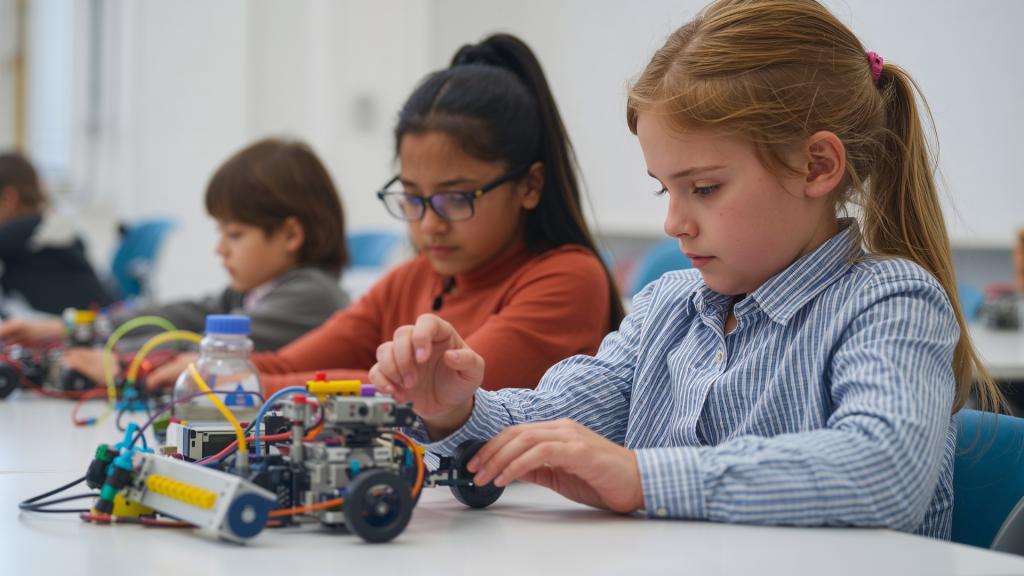 to real-world challenges aligned with the Sustainable Development Goals (SDGs) using robotics and technology tools. The hackathon will provide a dynamic platform for students to showcase their creativity, critical thinking, and technical skills in a supportive and inspiring environment. Building on the strong foundation of Amideast’s STEM Center, this hackathon marks a strategic step toward creating a culture of innovation and healthy competition among youth. It aims to empower students to transform their ideas into meaningful projects, confidently pitch their solutions, and connect with STEM mentors and professionals who will guide them throughout the journey.
Selected teams will receive 12 hours of mentorship and training on the competition requirements, project development, and innovation proce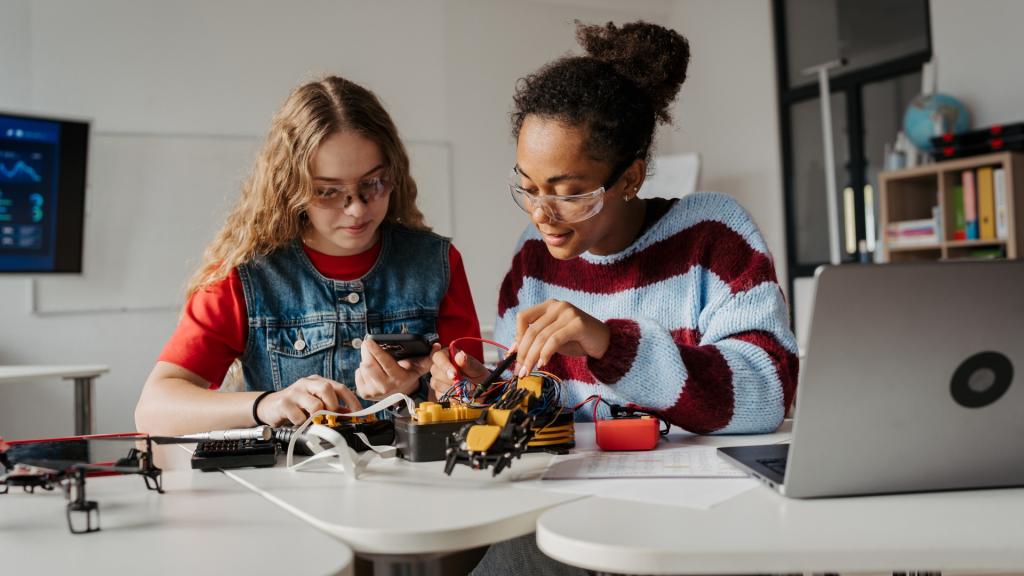 ss. Each team will work closely with a STEM trainer who will support them in conceptualizing and developing a solution that addresses a real-world challenge, preferably aligned with the United Nations SDGs. The proposed solution should integrate technology and innovative thinking to create a practical and impactful outcome. Following the mentorship phase, teams will dedicate 8 hours to independently develop and refine their projects in preparation for the final presentation.
On the day of the hackathon, teams will present their solutions, highlighting the problem they addressed, their design and implementation process, and the expected social, environmental, or economic impact of their innovation. While the final project is important, greater emphasis will be placed on the innovation journey—how students approach problem-solving, collaborate effectively, and communicate their ideas. Judges will evaluate the projects based on creativity, technical application, clarity of presentation, strength of the pitch, and the relevance and impact of the proposed solution.
Objectives
The objective of this initiative is to introduce children to the world of STEM competitions and encourage them to engage with STEM solutions. The hackathon will provide children with a structured, hands-on platform to be introduced to STEM competitions environment, to develop, refine, and showcase innovative STEM-based solutions. Through training and instructor-led workshops where participants will actively work on developing their projects with guidance and feedback, competitive project development, expert evaluation, and awards for outstanding projects, the fair aims to strengthen participants’ technical, entrepreneurial, and presentation skills while positioning Amideast’s STEM Center as a key contributor to the local STEM and innovation ecosystem.
Learning Outcomes
- Students will build real projects and learn practical skills like coding, designing, and solving problems in a fun, hands-on way.
- They will learn how to turn ideas into real solutions for everyday challenges and confidently present their projects.
- They will practice sharing their ideas clearly through simple presentations and pitch decks.
- They will develop teamwork skills by working in groups, sharing roles, and meeting deadlines together.
- Students will learn about the environment of STEM competitions, meet STEM experts, and explore future career paths in science, technology, and innovation.
Program Timeline
- February-Application & Filtration: Applications form will open in week 2 or 3 of February and will be open for 10 days or until the required number has been submitted; Filtration of application will be done until early March.
- March-Interviews: Shortlisted teams for interviews will be invited to online interviews in March.
- April-Training & Mentorship:
- From March 29 to April 2: For 12 hours, nominated teams will receive training to refine their projects, strengthen technical solutions, and perfect their pitching skills.
- From April 15 to 21: Teams work on 8 hours of challenge implementing their project on their own.
- April/May-Hackathon Day: Teams will engage in hands-on project development, mentorship sessions, and competitive pitching before distinguished judges by end of April or early May.
Amideast Support
- Teams' registration is free without any fees.
- Amideast will support the nominated teams with mentorship sessions for 12 hours with STEM experts to guide the teams to fine tune their projects and advise on technical support if needed.
- Amideast will provide working space, free internet, project materials during the mentorship sessions and hackathon day.
- Based on Judges' evaluation taking place on Hackathon Day, the most innovative and well-developed projects will be celebrated, with strong media coverage to highlight achievements.
• 1st Winner: EGP 15,000
• 2nd Winner: EGP 10,000
• 3rd Winner: EGP 5,000
Bootcamp Process
• Day 1 (4 hrs) - Engineering Design Process
o Research & Competition Skills
o Basic Research Skills (finding references, scientific basis)
o Pitch Deck & Poster Writing
• Day 2 (4 hrs) - Mentorship Session 1
o Technical guidance on project development
o Trial with Amideast trainer
• Day 3 (4 hrs) - Mentorship Session 2
o Continued technical guidance
o Project refinement and feedback
• Day 4 (4 hrs) - Hackathon Day 1
o Independent team project work
• Day 5 (4 hrs) - Hackathon Day 2
o Independent team project work
• Day 6 (8 hrs) - Hackathon Day 3 – Final Stage
o Finishing touches on projects
o Judging and evaluation
o Closing ceremony
Enrollment Requirements
About Teams:
- Teams of 2-3 members
- Team members aged from 11 to 15 years old or from grade 6 to grade 9.
- Applying teams should have a project idea related to SDGs and be implemented by technology and robotics that needs to be developed or fine-tuned with some advice.
- Teams can be school teams or friends, with no necessity on being aligned to any school/institution/association.
- Teams should provide their laptops on the competition day (if in external venue)
- Teams should have minor experience with the STEM field, have joined a course or a competition before.
Teams' members should show their complete participation in all the phases of the competition
About Projects:
- Projects’ ideas should be solving an existing problem in our current life, preferred with a sustainable solution or technique or methodology or tools.
- Projects’ ideas could be within any of SDGs 6,7,9, 11,12 and 14.
• SDG 6: Clean Water & Sanitation
• SDG 7: Affordable and Clean Energy
• SDG 9: Industry, Innovation and Infrastructure
• SDG 11: Sustainable Cities and Communities
• SDG 12: Responsible Consumption and Production
• SDG 14: Life Below Water
- Teams are free to use any tool or equipment in their project, but it should be safe without risks.
- No restrictions on any programming language, if applicable.
Competition Judging Criteria Will be posted soon.