
January 2026
In 2018, as an engineer with an internship at General Electric in Algeria, Chakib Khechai was contemplating his future. His work ethic and ambition had impressed his supervisor and she suggested something bold: pursuing a graduate degree in the United States through an exchange program like Fulbright. At the time, Khechai considered his internship at GE to be the biggest professional accomplishment of his life; he hadn't considered that would be just the first step in a successful career in business. Not knowing any Fulbright alumni, the opportunity seems more of a dream than a next step in his career advancement.
After his internship, Khechai developed and launched the educational technology platform Ted3im in Algeria, which provides educational animated content with artificial intelligence components. When he learned about the Fulbright Foreign Student Program through a social media post, he saw it as a way to continue developing the skills he needed to expand his business. This time, he was ready to apply.
Khechai's selection as a Fulbrighter allowed him to enroll in a Master of Business Administration program at Rice University's Jones Graduate School of Business in Houston, Texas. This experience expanded his worldview and gave him the tools to make a meaningful impact in Algeria, while expanding his network and collaborations with Americans to create new ventures.
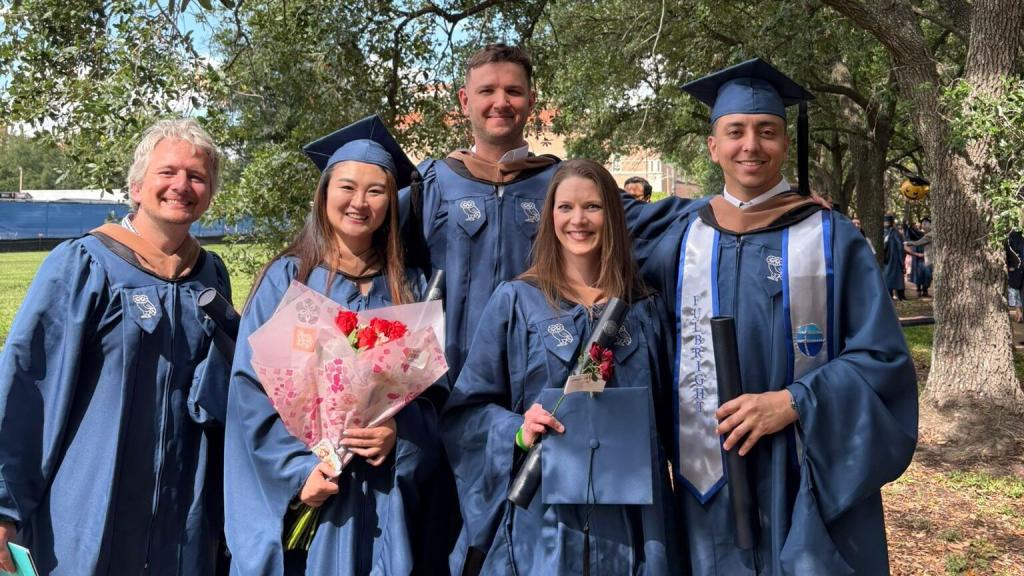
Chakib Khechai (right) at graduation.
Initially, Khechai's goal was simple: learn how to better manage Ted3im and help his education technology venture grow. After months of immersive training, collaboration with peers, and exposure to American entrepreneurial culture, his objectives evolved dramatically.
"The Fulbright Program helped me expand my vision and helped me scale," says Khechai. "Now I'm thinking about scaling internationally, raising funds, and building a company that has global reach."
Khechai recalls when he first arrived in the United States, he "stepped outside the airport in Houston and started looking at skyscrapers and the eight-lane roads, I just realized how big everything was, how ambitious people were. So, when I see what American entrepreneurs are doing and how courageous they are in pushing for innovations, I realized that I was not doing enough and my vision was not big enough."
Through his studies at Rice, Khechai gained both soft skills and critical business skills in fundraising, investing, marketing, data analysis, psychology and leadership.
He was inspired by the relentless drive of his American classmates. One peer of the same age, in particular, left a lasting impression. Khechai marveled at how he "wakes up every morning at 5 a.m., hits the gym, goes to class and manages a $50 million fund, all at the age of 29. He started from scratch with no help. That kind of discipline and ambition pushed me to aim higher."
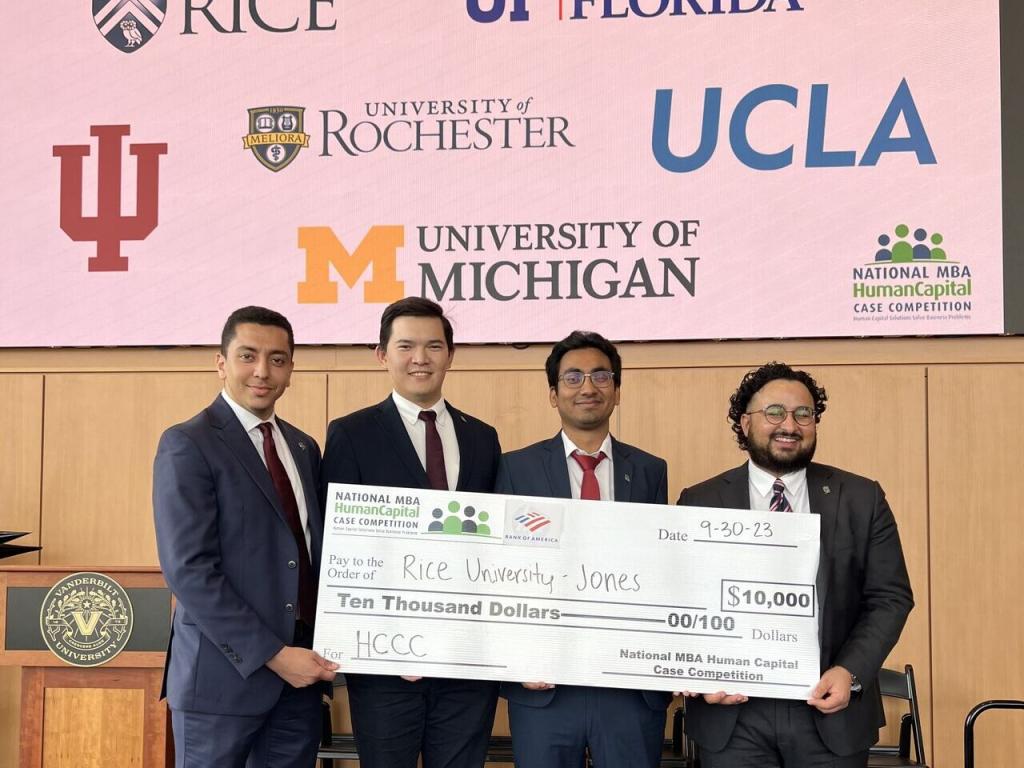
Khechai and his Rice University team won the 2024 Human Capital Case Competition hosted by Vanderbilt University.
Khechai, in turn, helped his American classmates by creating networking opportunities with businesspeople in the Middle East and North Africa region. He wanted to "bridge cultural, professional and academic gaps," he explained.
Khechai graduated in May 2025 and plans to scale his platform into new markets in Morocco, Tunisia, Libya and eventually the Gulf region. Since returning to Algeria, he has improved his platform and it is now generating revenue. His time in the United States produced new connections and ideas for future companies that benefit both American and Middle Eastern communities.
He is collaborating with a U.S.-based scientist on a biodegradable plastics startup to bring affordable food service products to market. The product has already been developed, and they plan to establish a headquarters for manufacturing operations in the United States. Then, they plan on bringing the product to the American market before expanding internationally with a subsidiary in Algeria.
For Khechai, entrepreneurship drives prosperity. By starting businesses, creating jobs, driving innovation, and keeping capital flowing, individual entrepreneurs contribute to a vibrant economy which allows Americans and Algerians to prosper. He reflects, "with great power comes great responsibility. We've been given the chance to grow, now it's our duty to give back, to society, to our communities."